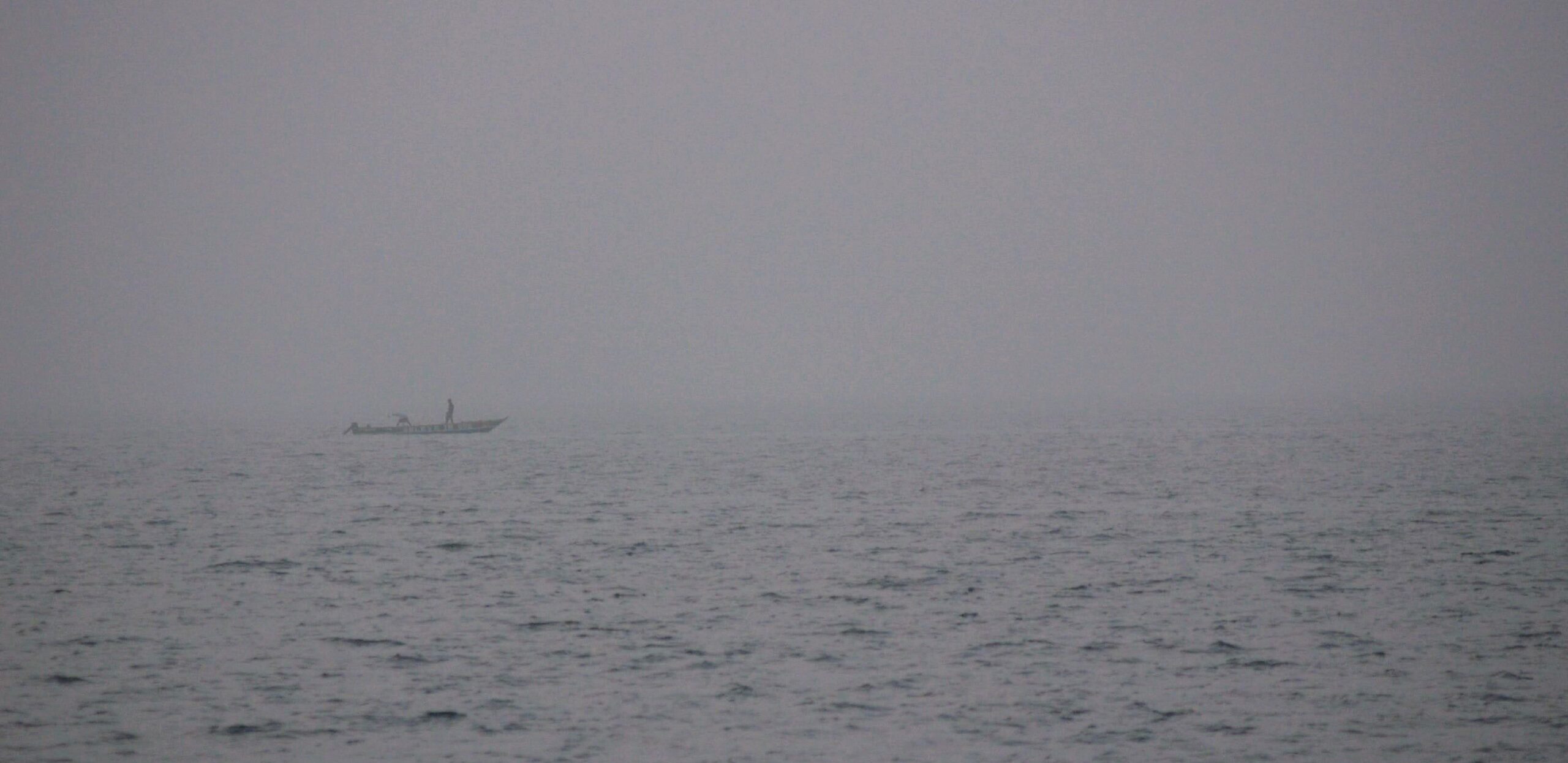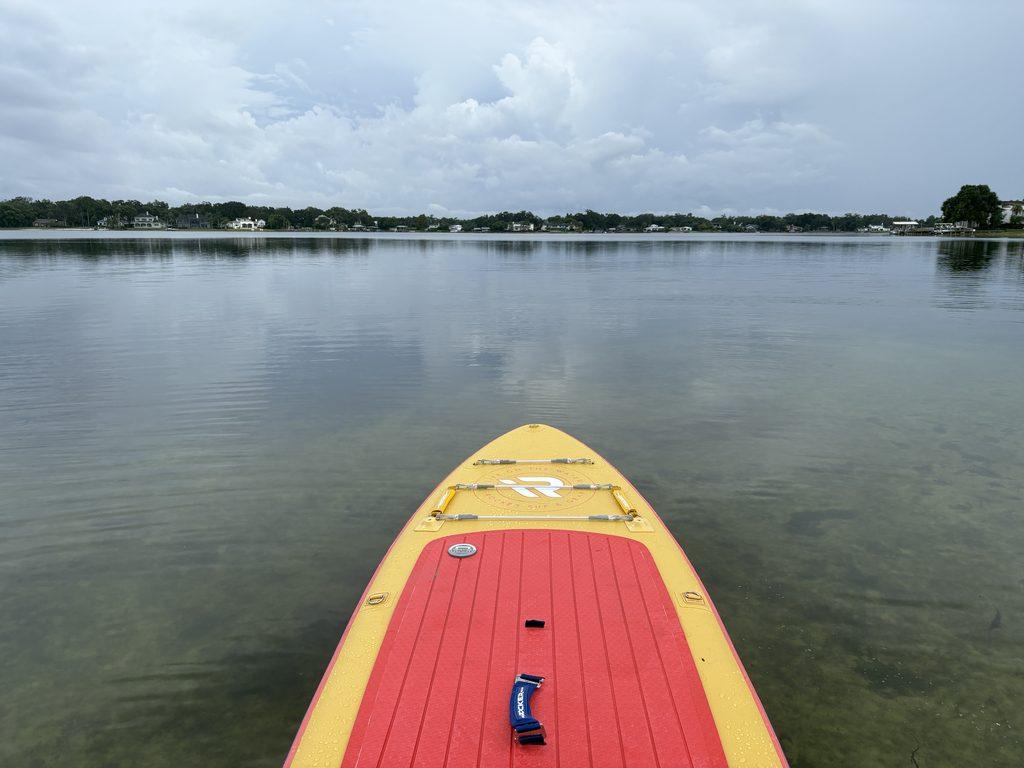
I’m fortunate to have a large lake in our neighborhood where I can paddleboard whenever I want. I usually go on Sunday mornings. It’s my church before church. Like anyone who spends time out in nature, I just feel closer and more connected to God out there. That’s our time together.
As I paddle, I usually start with my list of gratitude items. This is easy, because the fact that I get to do this at all is something I’m forever grateful for. The list goes on and on until I feel like He’s heard enough and it’s time to just be. So that’s what I do. Slowly and rhythmically I paddle in silence, taking in the moment and enjoying the sun or the breeze or both or neither. It doesn’t really matter. I’m in a state of moving meditation and I love it.
Today was a little different. I’m up before sunrise each day, and I spend that time reading and writing. The chapter I’m in right now in Patrick Morley’s A Reason to Get Out of Bed encourages the reader to “abide in Christ.” I’ve heard that a million times, and much of the time it sounds like a churchy word that nobody really understands, much less attempts to do, regardless of the promises. Myself included, I’m ashamed to admit.
The story is about a man running a business. The business is suffering. He’s working like crazy and the unpaid bills are piling up. He’s there all hours of the day and night, doing everything he can to keep it afloat. One night, discouraged, he shut the door, dropped to his knees and began to pray.
“Dear God, I owe you an apology. Somehow, I have taken over the ownership of this business. I know it really belongs to You, and I am sorry. I’m not doing too well. I’m stressed out, I’m not sleeping, I’m grouchy at home, and I’m neglecting my family. Right now, by faith, I am giving You back Your company. “
“Now, over there on my desk You have a pile of unpaid bills. I am going to trust that if You want this business to continue that You will find a way to get them paid. “
“In a moment, since I do trust You, I am going to get up, go home, have a nice meal, enjoy my children, and stop worrying about whether or not You want your company to succeed. Amen.”
One wouldn’t be surprised to learn that things started to turn around over the next few days. His circumstances didn’t change, at least not at first.
What changed was who was now carrying the weight.
Morley, Patrick. A Reason to Get Out of Bed: God Wants You to Be Fully Alive. Here’s How. (p. 12).
This is what it means to abide in Christ…
He does the carrying.
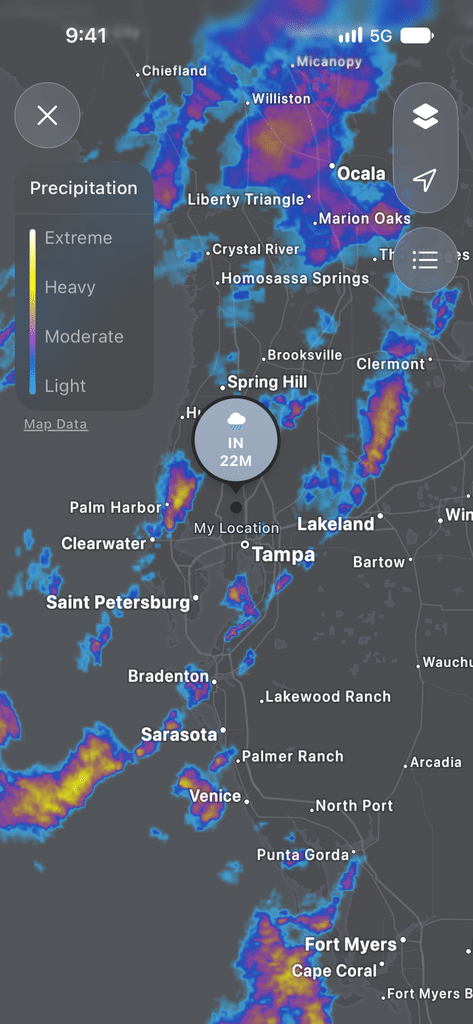
So with this thought swirling around in my head, I checked the weather, since it was still dark outside. Scattered rainstorms all around me, 45% chance of showers. No thunder, no lightning in the forecast, just rain. Part of me said scrap the paddle. The other part said go. I wrestled with it for probably 30 minutes. The practical, safe side of me (my mind) told me to get another cup of coffee and settle in. The other side (my spirit) told me to abide in Christ and go. Let Him worry about the weather. So off I went.
When I arrived at the lake, the water was like glass. The air was cool with a very slight breeze. The sun was peeking through a huge front of cloud rolling in. I hit the water. Perfect.
As the clouds rolled in, things got darker. The sun went behind them and the wind picked up a little. Part of me said turn back, scrap it for today. The other side urged me to abide. So I did. Knowing He was in charge of the weather let me watch with wonder and awe as those clouds rolled across the sky and dipped lower and lower toward me.
At the end of the lake, I turned my board to see what had rolled in behind me. A very low, dark cloud front. My mind said head home. My other side said “abide.” So I kept paddling.
Almost at the halfway point, I looked over my shoulder and there was not one, but two rainbows. Beautiful. I was filled with gratitude that I had decided to abide and to enjoy this moment with God. He always gives us more than we ask for or deserve, and today was no different. I got two rainbows.
Shortly after, they began to fade and a light rain started coming down. This too was a blessing, and I viewed each raindrop as one. I pictured every drop that fell on me as a blessing, and as they fell my heart grew and so did my smile. So did the rain. I kept paddling. Slowly, steadily, rhythmically and joyously, loving every minute of the rain, the wind and the small waves, out there with God while most everyone else was inside and dry drinking coffee.
Minutes later the rain passed, the wind died down, the water returned to glass and I made the final turn for home. All I could think of was how fortunate I was to experience a morning like this. I know those of you who hike or spend any time outdoors have had similar experiences. You just can’t help it.
But for me, this morning let me freely accept the gift I’ve resisted for far too long: letting Him carry the load, not me. Abiding has new meaning now. I get it. It is truly a gift, and one I’ll try to hold on to as the challenges of tomorrow begin to roll in once again.